
taste is context
On the feeds that raise us, and the culture lost in translation
There’s a photo of me from when I was seventeen, at an Arctic Monkeys concert, wearing a baby blue t-shirt with “I’d probably still adore you with your hands around your neck”, a lyric from their iconic song 505, handwritten across the collar in black ink. It’s one of those Tumblr-coded snapshots–a little blurry, a little dramatic, entirely sincere. A teenage attempt at authorship, feelings made wearable. A girl who romanticised everything.
I still do. I’m just more intentional about what I romanticise now.
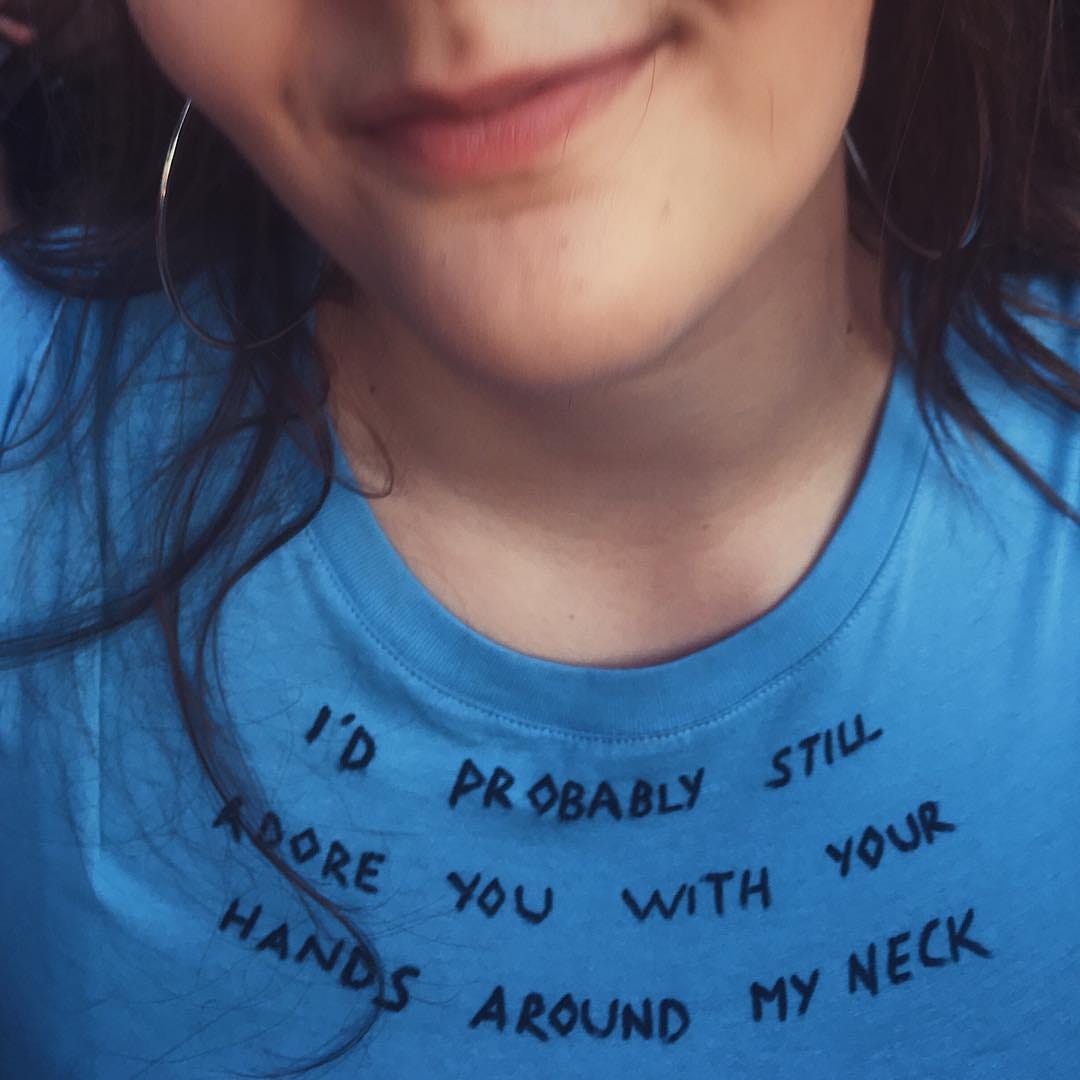
I didn’t first find Arctic Monkeys on Tumblr. It was actually a cover–Bradley Simpson singing R U Mine on YouTube, shared on my cousin’s Facebook page before The Vamps existed. That’s what pulled me in. But Tumblr is what gave it context. That’s where they became an aesthetic, a feeling. Gifs of Alex Turner dragging on a cigarette. That love letter to Alexa Chung (I will never recover). Lyrics layered over black-and-white stills of messy bedrooms. Teenagers staring out of windows. Tumblr made music into mood, and mood into memory.
![Alex Turner's Love Letter to Alexa Chung [POEM] : r/Poetry](https://substackcdn.com/image/fetch/$s_!_tGq!,f_auto,q_auto:good,fl_progressive:steep/https%3A%2F%2Fsubstack-post-media.s3.amazonaws.com%2Fpublic%2Fimages%2F4a20552d-551b-438c-89ef-7bb5a76bcf12_750x778.jpeg "Alex Turner's Love Letter to Alexa Chung [POEM] : r/Poetry")
That was the first time I understood how framing shapes feeling. I didn’t have the words for it yet, but I was already developing taste. Slowly, instinctively, emotionally. Like most of us were.
pattern recognition, before we called it that
Tumblr was a bootcamp in taste. It gave us a collage of references long before “curation” became algorithmic. It trained an entire generation in the emotional architecture of culture.
Even its messiness taught us something. Tumblr didn’t reward the cleanest voice. It rewarded the most emotionally specific. It was, for many of us, the first time we felt like participants in culture–not just consumers of it.
Tumblr mirrored the function of what sociologist Pierre Bourdieu might’ve called cultural capital–but it happened outside elite institutions. We were building aesthetic literacy through feeling, not formal education. We didn’t all have equal access to resources–but we had each other–and that alone changed everything.
when platforms became products
Then came Instagram. At first, it made sense. One photo. One caption. A kind of diary. A still frame that didn’t ask for polish. It was a space for context, before content became product. If we’d stopped there, added music and left the rest alone, maybe it would’ve been enough.
But we didn’t stop there.
TikTok arrived, and with it, a shift in tempo.
Suddenly, taste was no longer something you developed over time; it became something you signalled instantly.
Tumblr felt like intimacy. TikTok feels like optimisation.
Where once we built mixtapes for people we loved, now we build 15-second loops for people we’ll never meet.
We’ve entered what Mark Fisher called “the slow cancellation of the future,” where culture flattens into familiarity. Novelty becomes repackaged familiarity. And when platforms dictate pace, what gets amplified isn’t what resonates—it’s what’s already formatted.
Even rebellion feels pre-licensed. Chaos now has a content strategy—they call it brainrot. The timeline used to hold moods. Now it holds memes on life support. We’re fluent in irony, but starving for intimacy.
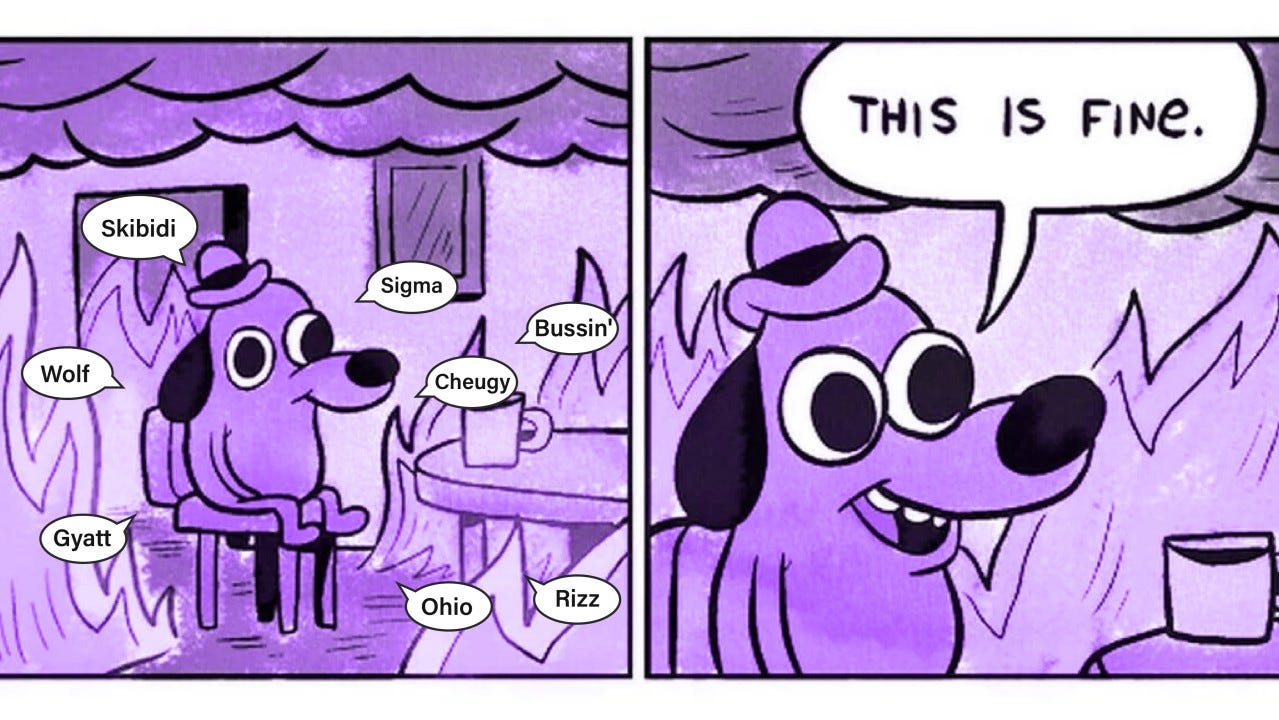
Without lineage, culture becomes content. Not just flat–but forgettable by design.
We look back on the Tumblr era with nostalgia–not just for the aesthetics, but for the way it allowed culture to unfold slowly, with feeling. Like a baby blue t-shirt inked with handwritten lyrics, it was personal, imperfect, and worn with intention. When TikTok dies–as all platforms do–we won’t look back with tenderness. We’ll look back with a cultural hangover. Not at the noise, but the system that engineered it. It won’t be remembered for what it nurtured, but for what it left behind: sped-up songs, decontextualised references, an audience trained to scroll past anything that doesn’t hit in the first three seconds.
When platforms shift from context-rich environments (like Tumblr or MySpace) to output-oriented economies (like TikTok or Reels), the cultural literacy required to participate also shifts. We’re not just seeing a change in style–we’re seeing a collapse in semiotic range, a narrowing of cultural language and emotional intelligence. And that affects more than just aesthetics. It impacts marketing. Storytelling. Brand-building. If you don’t understand how people build taste, you won’t hold their attention for more than six seconds. Cultural strategy starts with emotional literacy, and that’s not something you can outsource.
That’s why some campaigns miss the mark–they chase cultural cues without context, sound without story. But every so often, something cuts through—not because it’s loud, but because it’s literate.
Like the recent Heinz campaign in Brazil, where they turned that feral little moment of tearing sauce packets open with your teeth into actual grillz. I literally did it the other day at the pub—bit into a ketchup packet mid-fries and instantly thought of it. That’s the power of it: it works on two levels.
Visually, it’s a clever pun. But it also taps into something deeper: a shared, slightly unhinged behavior turned into cultural currency. Even the line–“você no drip, sem perder o molho” (roughly, “you’re dripping, without losing the sauce”)—doubles as a cheeky nod to hip-hop and food ritual at once.

That’s not trend-chasing. That’s context-aware creativity. It lands because it’s specific, lived-in, and just the right amount of irreverent.
Like Addison Rae opening a music video in an Iceland supermarket and ending it in the actual Icelandic wilderness. It shouldn’t work, but it kind of does. It’s trip-hop cosplay with a side of frozen peas. Weirdly candid. The jump from fluorescent lighting to cinematic transcendence is so blunt it loops back to being good. It doesn’t pretend to be deep, it just commits. And that’s what makes it stick. Recycled references, yeah. But arranged with enough fluency to register as taste, not just trend.
not a trend, a timeline
I started playing piano when I was six. My ears were trained before my mind was. I grew up listening to Buena Vista Social Club and Café del Mar compilations, Greek pop–Paparizou, Rouvas, Vissi–and the textured introspection of alternative, entechno: Mouzourakis, Sidiropoulos, Savvopoulos.
Twelve years of dance–ballet, contemporary, hip-hop–taught me rhythm through breath and muscle memory.
I studied music formally through school, all the way through IB. I was in bands and choirs, where I learned to hear the spaces between instruments and voices. I wrote comparative essays on Greek and Cuban music, Post Malone’s appropriation of hip-hop, and Tupac’s portrayal of Black women.
My taste was never about aesthetic. It was always about response.
It wasn’t linear, and it definitely wasn’t always “cool.”
I had my boyband phase. I loved High School Musical. I fell in and out of ska. I copied Amy Winehouse eyeliner. I made playlists for people I barely spoke to.
I learned by loving things too hard.
My clubbing years unlocked a different kind of ear. R&B, Afrobeats, rap.
Songs that moved me before I knew their history. Bass I felt in my spine.
I started going to ATH Kids shows. Watching Kareem Kalokoh playing at venues like the Athens Concert Hall and shady basements with equal audacity and clarity–local but expansive. Self-contained yet wide open. They shaped a scene that felt cinematic and unapologetically local, offering a nuanced perspective on inner-city Athens that still feels fresh years later.
When I was last home this past Christmas, I DJ’ed a couple nights at Penthouse–one of the only clubs in the city that plays strictly R&B, Afro, and Hip-Hop. It’s a spot I used to go to when I was younger, and suddenly I was sharing a lineup with DJs I grew up following; DJ Kas, Joseph Mouzakitis, Dazedboi.
I played edits I’d picked up in London, and a few I’d made myself–like an Afro flip of Nixterino Kolimpi by Saske, a Greek track I used to rinse on student radio back at Bath. One of the bar staff came up to me and said, “Wow, first time we’ve had a female DJ in here.” I didn’t really know how to take that. But what stuck with me more was hearing tracks I didn’t expect–Pa Salieu, Odeal–dropped in by other DJs. Voices I usually associate with late buses and flats in London, not central Athens. It reminded me how taste moves across borders, and that culture’s still in good hands over there.
I grew up in the crowd. Now I build with them, trade sounds, share references. Connect dots between Athens and London. Sometimes I forget how rare that is.
But I don’t forget what it taught me: taste isn’t something you collect. It’s something you participate in. It’s not a look. It’s a lineage.
🎧 bonus: the music that made me and the sounds currently moving me
For paid subscribers, I put together a playlist of songs that shaped my taste, both Greek and international. Some of the music I grew up with, danced to, studied, obsessed over.
And a preview of my next DJ mix–what’s been living in my headphones lately. No theme, no genre rules. Just memory, feeling, and a bit of motion.
developing taste is cultural work
Recently, I played ‘Heads Up’ with friends–mostly raised in South London, except for me and one other. Our references were totally different. Even the obvious stuff. It reminded me that taste isn’t just preference–it’s perception. It’s context.
Because context is what shapes taste, reference, perception. Where you grew up. What you heard on the radio. What your parents danced to in the kitchen. What your body learned to respond to.
I’ve come to deeply value people who grew up between timelines, geographies and sound languages. The ones who lived in translation–not just linguistically, but culturally. They’re the ones who notice the shifts before they’re named.
In a landscape where everything is optimised for speed and surface, taste becomes one of the last things you can’t fake. You either have range, or you don’t. You either know why something matters, or you’re guessing based on momentum. Ultimately, the references we reach for shape what gets recognised. What gets invested in. What gets remembered. And the artists, curators, and decision-makers who actually shift culture are the ones who understand the weight of what they’re choosing–not just what looks good, but what resonates across timelines.
the age of resonance
I don’t think the next era of culture will be ushered in by those who are the fastest or the most visible. I think it belongs to the quiet builders–the ones developing range, reading across disciplines, and translating without diluting.
People who don’t just reference culture, but remember and honour it.
Platforms didn’t kill taste. They just made it harder to hear your own. When everything moves fast, only what’s already familiar feels safe; a soundbite, a trend format, a familiar caption structure.
We’re entering a slower, more textured phase of cultural movement–one where specificity matters more than speed. Where emotional clarity starts to outweigh algorithmic stickiness. Where the most resonant work won’t be the one that arrives first, but the one that lasts.
And that kind of work? It can’t be charted by data alone.
Algorithms don’t know why something matters. They can’t feel memory. They can’t trace intention. They can optimise what’s already been done, but they can’t initiate what hasn’t happened yet.
We’re in an era where people joke that “AI stole my job.” But if your job is taste–if your value is built on cultural awareness, cross-referencing, emotional memory–then no, it didn’t.
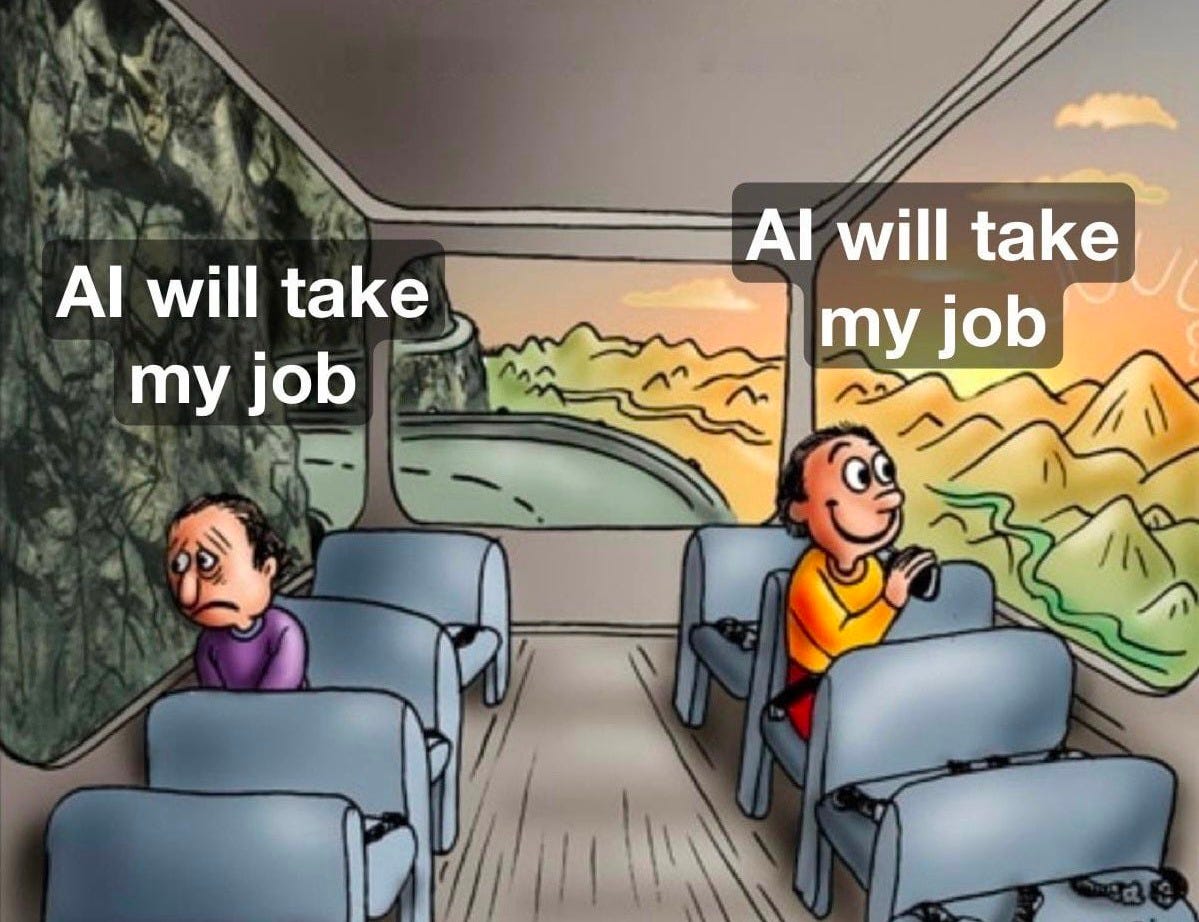
The next great curators won’t be creators–they’ll be connectors. People who aren’t just referencing but tuning into memory, not just remixing but restoring context.
Because data can’t replace discernment. And scale will never replace soul.
What’s timeless isn’t formatted. It’s felt.
And it’s built through context.
I build from taste–through every mix, every story, every artist I advocate for. Not to follow culture, but to shape it.
why I write here
That’s part of why I’m publishing here. Substack gives me room to move slowly, to stretch an idea, to trace a thought all the way back to its root.
It reminds me of what Tumblr once gave us: presence over performance. Space to unfold, not optimise. It’s not optimised for virality, which is exactly why it feels like something worth building on.
I still use TikTok. I understand Instagram. But I don’t confuse reach with resonance, and I don’t treat tools like infrastructure. Some platforms teach you how to be seen. Others teach you how to see.
Substack, for me, is about the latter.
taste is context
I want to end by giving credit to a quote that’s stayed with me since I first heard it–one that quietly inspired this entire piece.
Jim Legxacy said in his KTO interview:
“If you’ve got high taste in one thing, and then you say fuck it, I wanna be an artist–you’ll have high taste in that too.”
That’s the idea that’s been living underneath all of this. That taste converts. That it transfers. But only if you’ve built it honestly. Through attention, not trend adoption. Through context, not clout.
Taste isn’t what you like.
It’s what you care enough to carry.
Not about being first, but being fluent.
It’s what makes a baby blue t-shirt feel like a manifesto.
Taste is context.
And that’s the frequency I’m building from.
If you get it, you get it. If you think someone else will–pass it on.